
When your garage door stops working properly, replacement isn't always necessary. A broken spring, worn roller, damaged cable, or opener problem can often be repaired without replacing the entire door.
However, there comes a point when continuing to repair an older garage door stops making financial sense. Frequent problems, structural damage, corrosion, and worn components can make replacement the better investment.
If you're considering garage door replacement in San Diego, here's how to tell whether you should repair what you have or invest in a new door.
When Garage Door Repair Makes Sense
Repair is usually the better option when the problem is limited to one component and the rest of the garage door remains in good condition.
Broken Springs
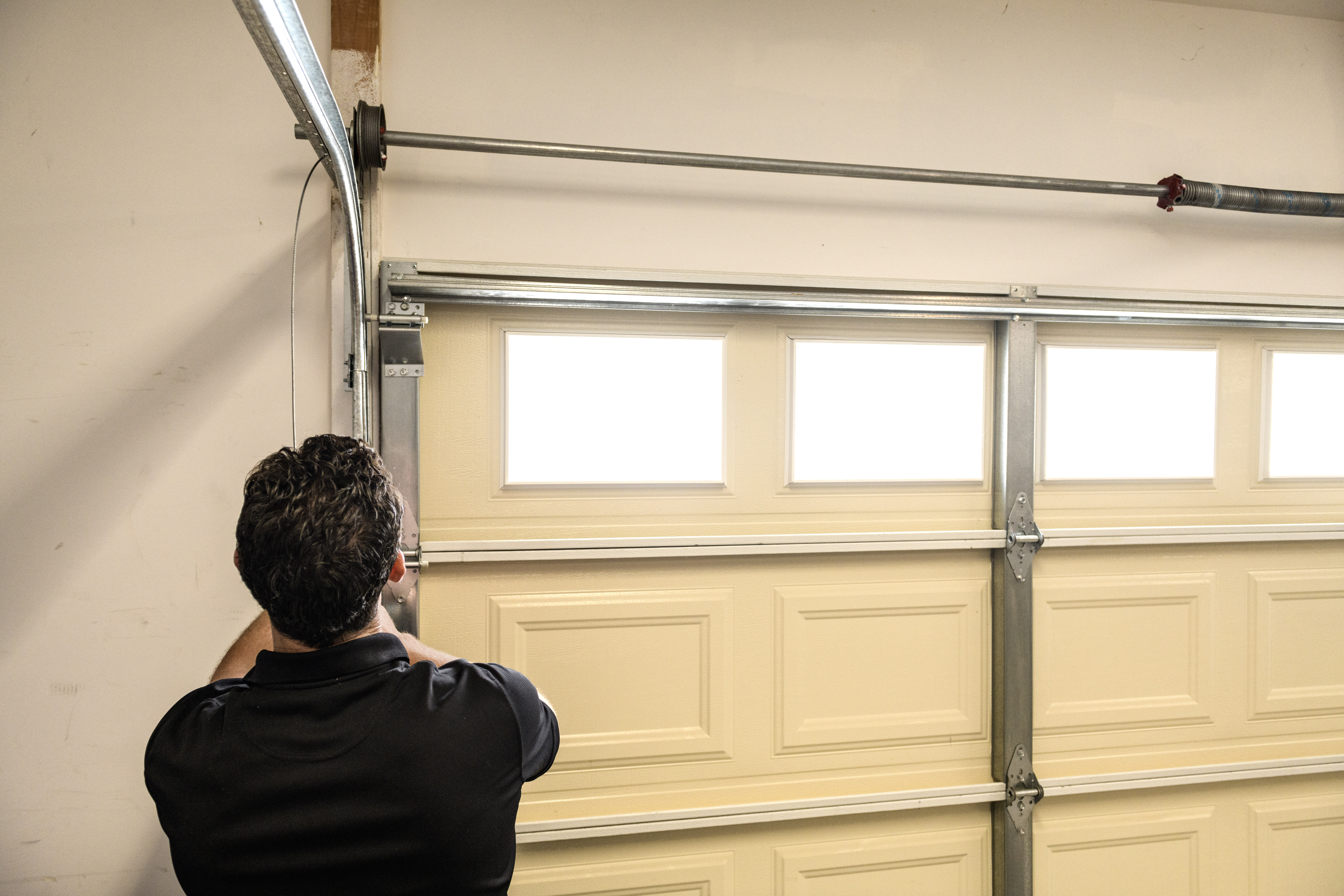
Garage door springs wear out after repeated opening and closing cycles. When a spring breaks, the door may become extremely heavy, refuse to open, or only lift a few inches.
If the panels, tracks, rollers, and other components are still in good condition, replacing the springs is usually all that's needed.
Because springs operate under significant tension, replacement should be handled by a garage door professional.
Damaged Cables, Rollers, or Hinges
Cables, rollers, and hinges experience wear every time you use the door.
Problems can include:
Frayed or loose cables
Worn rollers
Damaged hinges
Squeaking or grinding
Shaky or uneven movement
These parts can usually be replaced individually. If the door itself remains structurally sound, there's little reason to replace the entire system because of one worn component.
Garage Door Opener Problems
A garage door that won't open doesn't necessarily have a problem with the door.
The opener motor, sensors, drive system, or controls may be responsible. Repairing or replacing the opener can restore normal operation without replacing the door.
One Damaged Panel
Minor impact damage is another situation where repair may make sense.
Individual panels can sometimes be replaced if a compatible section is available. This is often more economical than installing an entirely new door.
If multiple panels are damaged, however, full replacement becomes worth considering.
6 Signs Garage Door Replacement May Be Worth It
The decision changes when problems are no longer isolated. Here are six situations where a new garage door may provide better value.
1. Repairs Are Becoming Frequent
An occasional repair is normal. Repeated service calls are a warning sign.
Maybe you replaced the springs last year, repaired a cable several months later, and are now dealing with worn rollers or damaged panels.
Each repair may seem manageable on its own, but the combined cost can become substantial.
If you're regularly calling for garage door repairs, have the entire system evaluated. Knowing which components are likely to fail next can help you determine whether another repair is worth paying for.
2. Multiple Components Are Worn Out
Garage door components often age at roughly the same time.
If your door needs new springs, rollers, hinges, weather seals, and panel repairs, replacing each part individually may not be the best use of your money.
This is especially true with an older door. Fixing one problem only to have another component fail shortly afterward can quickly become frustrating and expensive.
A complete replacement gives you a new door and hardware instead of continuing to rebuild an aging system one part at a time.
3. The Door Has Structural Damage
A small dent doesn't necessarily affect operation. Significant bending, warping, or deterioration does.
Replacement may be appropriate if you notice:
Several damaged panels
Severe warping
Extensive rust
Sections separating around hinges
Damage preventing the door from closing evenly
Major vehicle or impact damage
A structurally damaged door can also place extra stress on the tracks, rollers, springs, and opener.
4. Rust and Corrosion Are Spreading
San Diego's coastal environment can be tough on garage door components. Moisture and salty air can contribute to corrosion on springs, cables, hinges, rollers, tracks, and steel panels.
A small amount of surface rust doesn't automatically justify replacement.
Widespread corrosion is more concerning, especially when it affects several mechanical parts or compromises the door itself.
If you're repeatedly replacing rusted components, ask whether replacing the aging system with materials better suited to the local environment would make more sense.
5. The Door Is Older and Developing Problems
Age alone isn't a reason to replace a garage door.
A well-maintained older door that operates safely and reliably may continue working for years. Age becomes important when major repairs start appearing.
Before paying for an expensive repair on an older door, consider its overall condition. Look at the panels, springs, cables, rollers, tracks, hinges, and opener.
If several parts are nearing the end of their useful life, replacement may offer better long-term value.
6. You Want Better Insulation or Curb Appeal
Sometimes replacement makes sense even when a door can technically be repaired.
Older garage doors may provide little insulation. If your garage is attached to your home, used as a workspace, or has living space above it, upgrading to an insulated door may improve comfort.
Appearance can also factor into the decision. Garage doors take up a large portion of many homes' exteriors. A dented, faded, or outdated door can affect the overall appearance of the property.
If your existing door already needs substantial repairs, upgrading its insulation and appearance at the same time may make more sense than putting money into the old one.
Garage Door Repair vs. Replacement
Here's a simple way to compare the two options.
Consideration | Repair Makes Sense | Replacement Makes Sense |
Damage | One isolated issue | Multiple damaged areas |
Components | Most parts are in good condition | Several parts are worn |
Repair history | Problems are occasional | Repairs are becoming frequent |
Structure | Door is straight and stable | Door is warped or badly damaged |
Corrosion | Limited surface rust | Widespread corrosion |
Performance | Generally reliable | Consistently noisy or uneven |
Efficiency | Current insulation is adequate | Better insulation is desired |
The cheapest option today isn't always the least expensive option over the next several years. Consider what you're likely to spend maintaining the existing door before deciding.
Should You Replace the Garage Door Opener Too?
Installing a new garage door doesn't automatically mean you need a new opener.
If the existing opener is properly sized, compatible, and operating reliably, it may be possible to keep it.
Consider replacing the opener if it is unreliable, excessively noisy, struggling to move the door, or missing features you want.
Newer openers may offer smartphone controls, quieter belt-drive operation, battery backup, and updated safety features.
Ask your installer to inspect the opener and determine whether it can be used safely with the new door.
When Should You Stop Using Your Garage Door?
Some problems require immediate attention.
Stop operating the door and contact a professional if:
A spring is broken
A cable is frayed, loose, or broken
The door has come off its tracks
The door suddenly feels extremely heavy
It falls or closes unexpectedly
The door is hanging unevenly
Panels are severely bent or unstable
Continuing to operate a damaged garage door can cause additional damage and create a safety hazard.
Garage Door Replacement in San Diego
A newer door with a broken spring may only need a spring replacement. An older door with damaged panels, worn hardware, corrosion, and several recent repairs may be a better candidate for replacement.
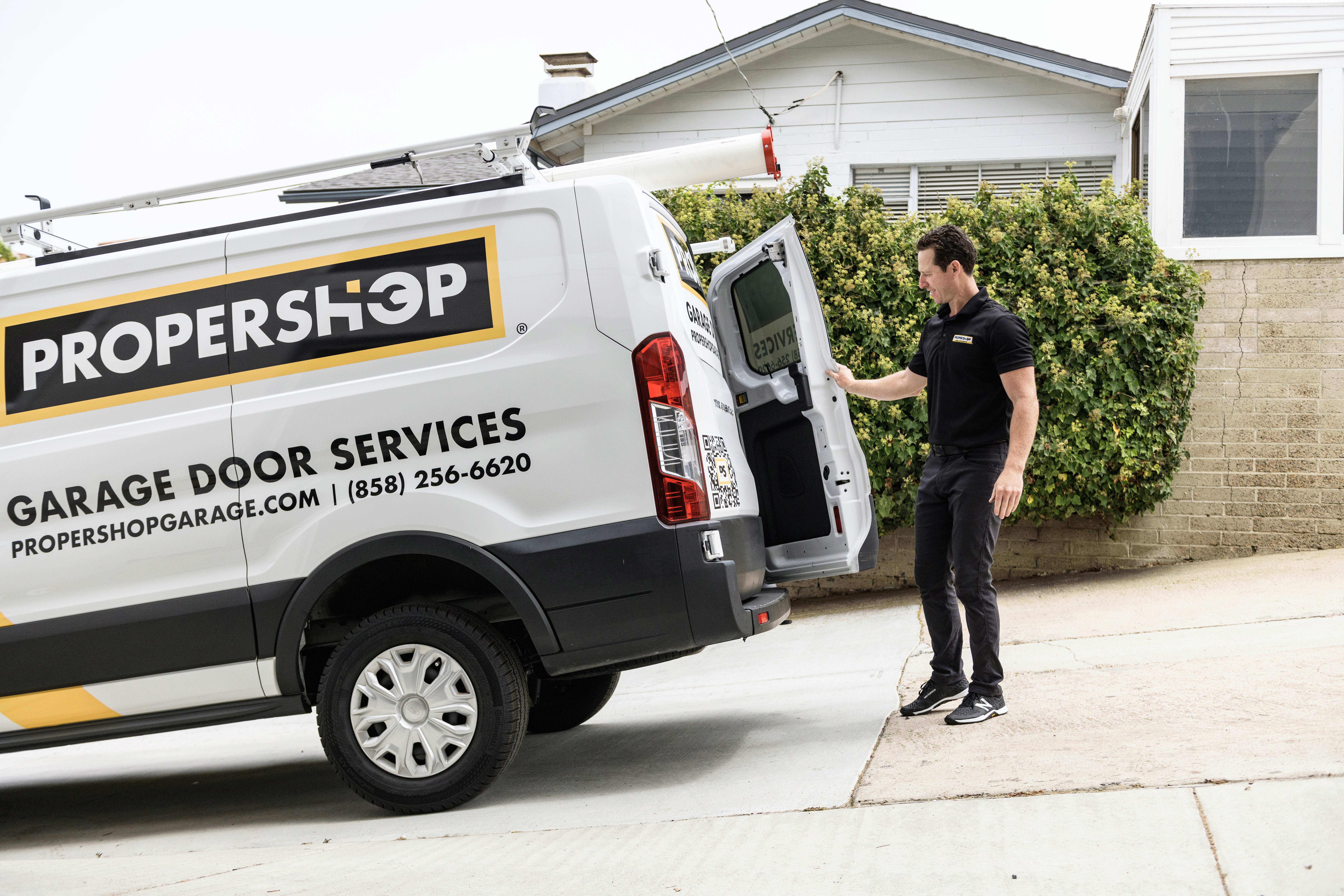
ProperShop Garage Door Services provides garage door repair, installation, maintenance, and garage door replacement in San Diego. A professional inspection can help identify the condition of the entire system and determine whether repairing or replacing the door makes more sense.
If you're unsure which option is right for your home, schedule an inspection with ProperShop Garage Door Services to get a clear recommendation based on the condition of your door.