Few things are more frustrating than pressing your garage door remote and getting no response. A faulty opener can leave you stuck outside, unable to secure your home, or dealing with a door that refuses to move.
Common causes range from simple issues like dead batteries and blocked sensors to larger problems involving the motor, circuit board, or drive system. This guide explains why your garage door opener is not working, what you can troubleshoot yourself, and when professional repair or replacement is the better option.
Common Reasons Your Garage Door Opener Stops Working
Problem | Symptoms | Solution |
Dead remote batteries | Remote does not respond | Replace batteries or reprogram remote |
Power issues | Opener has no lights or response | Check outlet, breaker, and connections |
Sensor problems | Door reverses or will not close | Clean and align safety sensors |
Worn motor gears | Motor runs but door does not move | Repair or replace opener components |
Circuit board failure | No response or inconsistent operation | Professional diagnostics |
Old opener system | Frequent breakdowns | Consider replacement |
Understanding the cause helps determine whether your opener needs a simple adjustment, repair, or full replacement.
1. Worn Garage Door Opener Motor Gears
The internal gears inside a garage door opener transfer power from the motor to the drive system. These gears can wear out, especially on older openers used multiple times daily.
Signs of failing opener gears include:
Motor runs but the door does not move
Clicking or grinding noises
Door starts moving but stops halfway
Slow or inconsistent operation
Replacing opener gears requires removing and aligning internal components, so professional garage door opener repair is often the safest option. If the opener is older and has repeated mechanical issues, replacement may be more cost-effective.
2. Overheating Garage Door Opener Motor
Garage door openers can overheat when they are overworked or under strain.
Common causes include:
Frequent daily use
Extreme garage temperatures
A heavy or unbalanced garage door
Signs of overheating:
Opener works, then suddenly stops
Wall button becomes temporarily unresponsive
System starts working again after cooling down
Frequent overheating may indicate a failing motor or another issue putting extra stress on the opener.
3. Electrical Problems or Power Loss
Sometimes the opener itself is not the problem. Electrical issues can prevent the system from responding.
Check:
The opener is plugged in
The outlet has power
The breaker has not tripped
The power cord is not damaged
If the opener has power but still does not respond, the issue may involve internal electronics.
4. Garage Door Remote Not Working
A non-working remote is one of the easiest opener issues to troubleshoot.
Possible causes include:
Dead batteries: Replace the batteries first.
Lost programming: Power outages or resets can disconnect the remote.
Signal interference: LED bulbs and nearby electronics can affect signals.
Damaged remote or receiver: Replacement may be needed if troubleshooting does not work.
5. Faulty Garage Door Safety Sensors
Garage door openers use photo-eye sensors to prevent accidents. When sensors are dirty, blocked, or misaligned, the opener may refuse to close.
Common signs include:
Door closes halfway and reverses
Flashing opener lights
Door only closes when holding the wall button
Try cleaning the sensor lenses, removing obstructions, and checking alignment. Damaged sensors or wiring require professional repair.
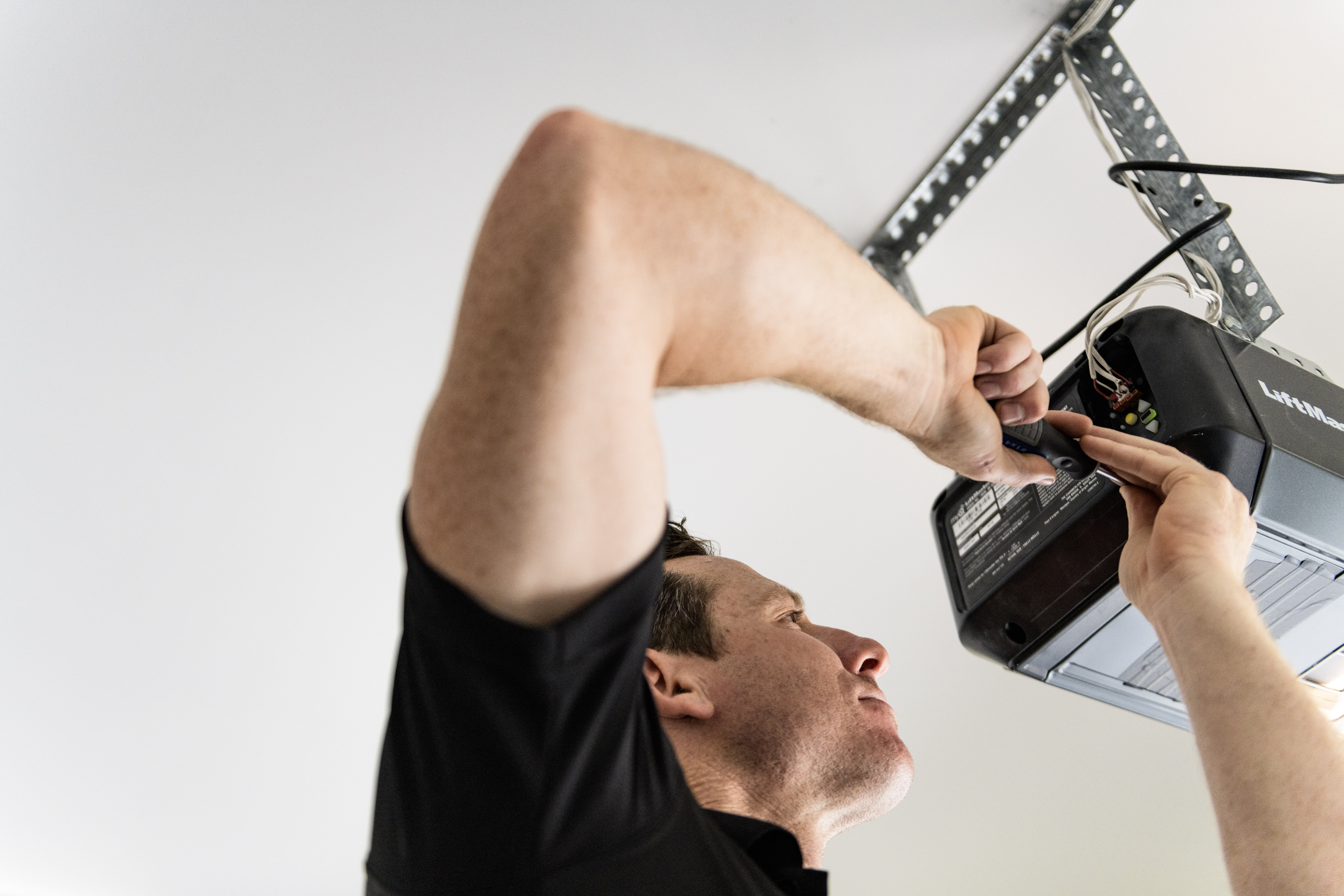
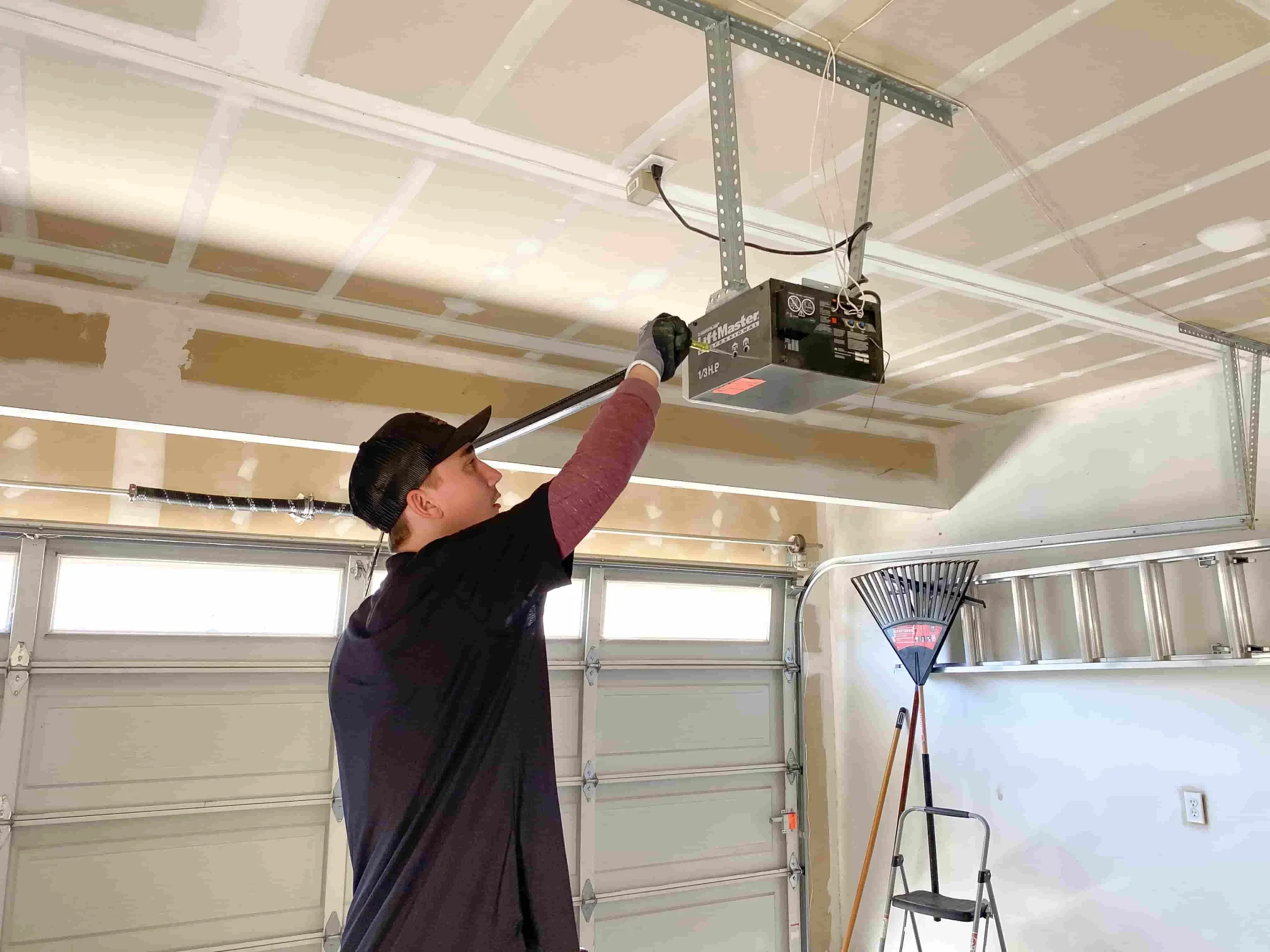
6. LiftMaster Opener and Circuit Board Problems
Modern LiftMaster openers include smart features like WiFi connectivity, battery backup, and smartphone controls. However, electronic components can eventually fail.
Common issues include:
Logic board failure
WiFi connection problems
Safety system errors
Circuit board issues
Because electronic failures require specialized testing, a technician can determine whether repair or replacement is the better solution.
Garage Door Opener Troubleshooting You Can Try
Before scheduling service, homeowners can safely:
✅ Replace remote batteries
✅ Reprogram the remote
✅ Clean and realign sensors
✅ Check the breaker and power connection
✅ Perform a basic power reset
Avoid:
❌ Opening the motor housing
❌ Repairing circuit boards
❌ Handling electrical wiring
❌ Replacing internal components without experience
Garage door openers contain electrical parts and heavy moving components that can cause injury if handled incorrectly.
Should You Repair or Replace Your Garage Door Opener?
Repair Makes Sense When:
The opener is less than 10 years old
The motor still works properly
The issue involves sensors, remotes, or minor parts
Replacement parts are available
Replacement May Be Better When:
The opener is 12–15 years old
Repairs are becoming frequent
The motor overheats or struggles
Parts are discontinued
You want smart-home features
New garage door openers may include:
Smartphone controls
Battery backup
Quieter operation
Improved security features
Real-time alerts
How Long Does a Garage Door Opener Last?
Most garage door openers last 10 to 15 years, depending on:
Usage frequency
Maintenance
Garage conditions
Opener quality
Door balance and weight
Routine maintenance and inspections can help extend your opener’s lifespan.
Garage Door Opener Repair in San Diego
Heat, humidity, coastal air, and daily use can accelerate wear on garage door components. Homeowners looking for garage door opener repair in San Diego or garage door opener replacement in San Diego benefit from working with technicians who understand local conditions.
A professional garage door technician can:
Identify the actual cause of failure
Recommend repair or replacement options
Install the correct opener system
Verify that safety features are working properly
Fix Your Garage Door Opener Before It Fails Completely
A garage door opener usually shows warning signs before it stops working completely. Slow operation, strange noises, flashing lights, and remote issues can indicate a developing problem.
Addressing these issues early can prevent unexpected breakdowns and help keep your garage secure. Whether you need opener repair, LiftMaster troubleshooting, or a complete replacement, professional service can restore reliable operation. Schedule an appointment today!